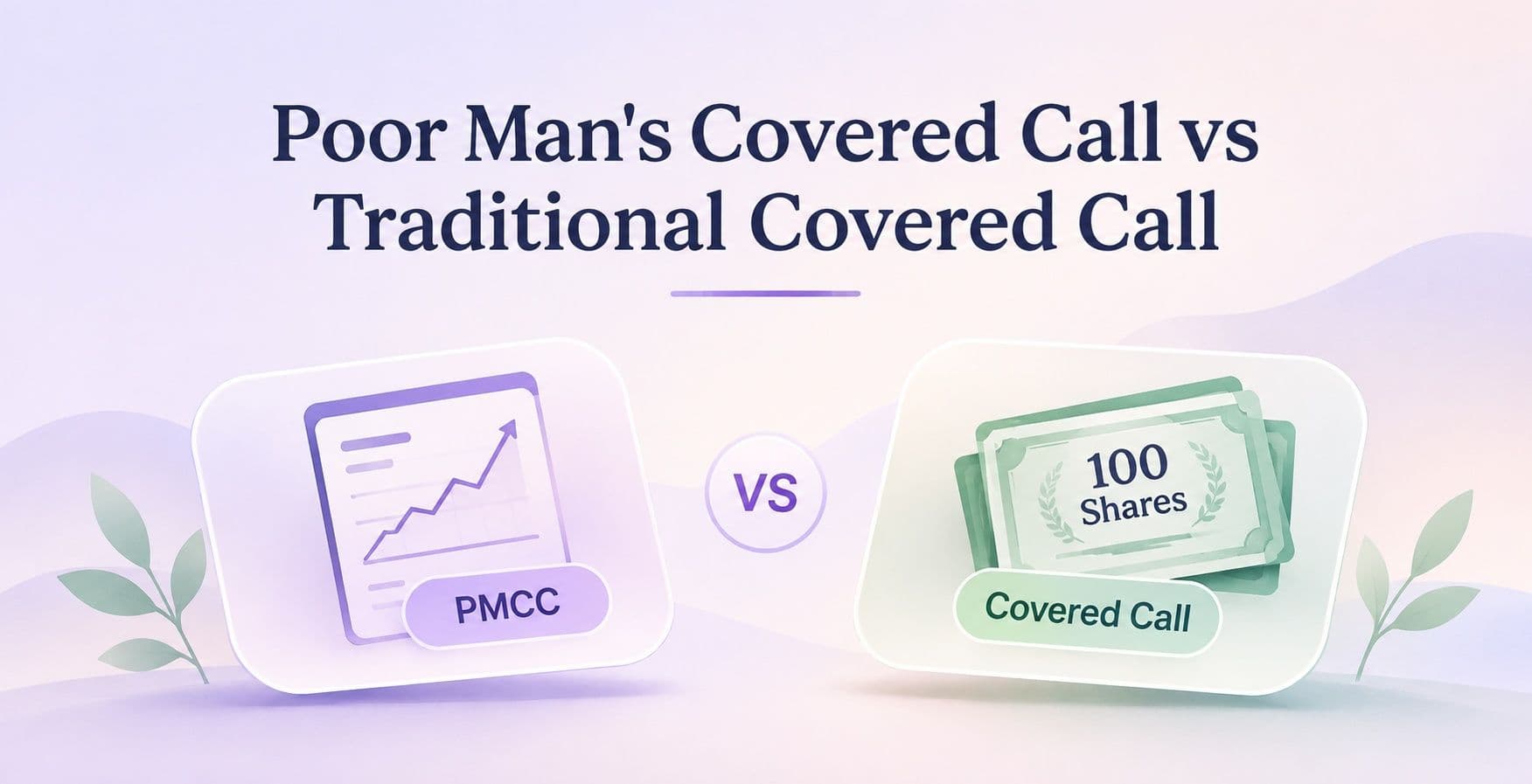
Poor Man's Covered Call vs Traditional Covered Call
Compare poor man's covered call vs traditional covered call. Understand their costs, risks, mechanics and suitability for financial advisors.
A poor man's covered call (PMCC) lets traders sell call options without owning 100 shares of a stock. Instead, they buy a long-term, deep in-the-money call and sell a shorter-term call against it. The goal is to collect option premiums while keeping exposure to the stock's price.
A traditional covered call takes a more direct approach. The investor owns 100 shares and sells a call against them. Both strategies can bring in premium income, but they work differently and carry different risks. For financial advisors, understanding these differences matters when discussing costs, client suitability and ongoing management.
Poor Man's Covered Call vs. Traditional Covered Call: What's the Difference?
The biggest difference is what the investor owns.
With a traditional covered call, the investor owns 100 shares of a stock. With a poor man's covered call, the investor buys a long-term call option instead. That option acts as a substitute for the shares.
Here's how the two strategies compare:
| Feature | Traditional Covered Call | Poor Man's Covered Call |
|---|---|---|
| Long position | 100 shares | Long-term call option |
| Short position | Short-term call | Short-term call |
| Initial capital | Usually higher | Usually lower |
| Owns the shares | Yes | No |
| Receives dividends | Yes, while holding shares | No direct dividend entitlement |
| Time decay | Affects the short call | Affects both options |
| Main risks | Stock losses and capped upside | Option losses, time decay and assignment |
| Management | More straightforward | Requires closer monitoring |
A PMCC can cost less to open, but that doesn't automatically make it a better deal. The long call has an expiration date and can lose value. Both options also respond to changes in the stock price and market volatility.
If you need a refresher on the traditional approach, see our guide to what a covered call is and how it works.
How Does a Poor Man's Covered Call Work?
A poor man's covered call uses two options on the same stock or ETF.
First, the trader buys a deep in-the-money call with a longer expiration date. This gives them exposure to the stock without buying 100 shares.
Next, they sell a shorter-term call, usually with a higher strike price. They collect a premium from the buyer of that call.
The trader hopes the short call expires worthless. If it does, they keep the premium and can consider selling another call. Meanwhile, the long call remains open.
That's the basic idea. But the two options don't behave exactly like stock and a covered call. The long call has its own time value, expiration date and sensitivity to volatility.
Poor Man's Covered Call Example
Let's say a stock trades at $100.
A trader doesn't want to spend $10,000 buying 100 shares. Instead, they consider a PMCC.
They buy a long-term $80 call for $2,500 and sell a 30-day $110 call for $150.
Here's what the opening trade looks like:
| Position | Trade | Amount |
|---|---|---|
| Buy long-term call | $80 strike, 12 months to expiration | -$2,500 |
| Sell short-term call | $110 strike, 30 days to expiration | +$150 |
| Net cost | $2,350 |
The trader collects $150 upfront, reducing the cost of the long call. But that premium isn't guaranteed profit. The long call can lose value, and the short call can become more expensive to close if the stock rises.
What happens next?
-
The stock stays below $110: The short call may expire worthless. The trader keeps the $150 premium, while the long call remains open.
-
The stock rises above $110: The short call may be assigned. The trader must deal with the obligation to deliver shares, even though they don't own them.
-
The stock falls: The long call may lose value. The premium collected may not make up for that loss.
These figures are for illustration only. Actual results depend on option prices, volatility, time decay, fees and how the positions are managed.
What Are the Risks of a Poor Man's Covered Call?
The lower upfront cost can make a PMCC look attractive. But there are a few things advisors should look at before considering it for a client.
The Long Call Can Lose Value
If the stock price falls, the long call can lose value too. A sharp decline can wipe out the premiums collected from several short calls.
Unlike owning shares, the trader also has to deal with an expiration date. If the long call expires out of the money, the entire amount paid for it can be lost.
Both Options Are Affected by Time Decay
The short call can lose value as expiration gets closer. That's often what the trader wants.
The long call also loses time value, though usually at a different rate. This means the two options can respond differently as time passes.
Changes in Volatility Can Hurt the Position
A drop in implied volatility can reduce the value of the long call. This can happen even if the stock price hasn't moved much.
Advisors should look at how both options respond to volatility, not just the premium from the short call.
Early Assignment Can Leave the Trader Short Shares
This is one of the most important differences from a traditional covered call.
If the short call is assigned, the trader may have to deliver 100 shares per contract. Since they don't own those shares, assignment can create a short stock position.
The trader may need to exercise the long call or close the positions. Exercising early can mean giving up the remaining time value of the long option.
Read our guide to covered call assignment and what advisors should know for a closer look at how assignment works.
Trading Costs Can Add Up
Long-dated options can have wider bid-ask spreads. Opening, closing and adjusting two options can add to the cost.
A strategy that looks cheaper at entry may not stay cheaper once all trading costs are included.
When Should Advisors Consider Each Strategy?
The choice depends on what the client owns, how much capital they want to commit and how comfortable they are managing options.
A traditional covered call may make more sense when a client already owns shares and is willing to sell them at a set price.
A PMCC may be worth examining when a client wants stock exposure but prefers not to buy 100 shares outright. However, the client must understand the added risks that come with owning options instead of shares.
| Client's situation | Strategy to consider |
|---|---|
| Already owns 100 shares | Traditional covered call |
| Wants to keep direct share ownership | Traditional covered call |
| Wants stock exposure with less upfront capital | PMCC |
| Prefers a simpler position | Traditional covered call |
| Can actively monitor two options | PMCC may be worth evaluating |
| Wants unlimited upside | Neither strategy while the short call is open |
Neither approach is right for every client. A lower entry cost doesn't automatically mean lower risk.
What Should Financial Advisors Look At Before Recommending a Strategy?
Before discussing either approach, advisors should look beyond the premium a trade might collect.
Consider these questions:
-
Does it suit the client? Look at their investment goals, risk tolerance and experience with options.
-
What is the full cost? Include the option premium, commissions, spreads and any costs from adjusting the trade.
-
What happens if the short call is assigned? Make sure there's a clear plan for handling the resulting position.
-
How will taxes be handled? Exercise, assignment and closing trades can have different tax consequences.
-
Who will monitor the trade? Both strategies need oversight, but a PMCC requires tracking two options with different expiration dates.
The aim is to understand what the client is taking on, not just how much premium the strategy may collect.
How AcuBooth Helps Advisors Manage Traditional Covered Calls
For advisors working with clients who already own eligible shares, AcuBooth offers a rules-based covered call overlay program.
Instead of managing every covered call manually, advisors can use AcuBooth to apply predefined rules to eligible equity positions in Schwab accounts. The platform supports call writing, rolling, execution logs, premium tracking and performance reports.
Advisors also retain controls over eligible positions and strategy settings.
It's important to note that AcuBooth's program is designed for traditional covered call overlays. It does not execute poor man's covered calls or long call diagonal spreads.
If you're evaluating covered call management for client portfolios, take a look at AcuBooth's advisor program. You can also see how the platform works and review current pricing.
FAQs
What Is a Poor Man's Covered Call?
A poor man's covered call is an options strategy that buys a long-term call and sells a shorter-term call instead of owning 100 shares.
How Does a Poor Man's Covered Call Strategy Work?
The trader buys a deep in-the-money call for longer-term exposure, then sells shorter-term calls to collect premiums.
Is a Poor Man's Covered Call Risky?
Yes. The long call can lose value, both options are affected by time decay, and early assignment can create a short stock position.
Can You Lose Money With a Poor Man's Covered Call?
Yes. Losses can occur if the long call loses value or the short call moves against the trader.
Why Is It Called a Poor Man's Covered Call?
It can require less upfront capital than buying 100 shares because a long-term call option takes their place.
Stay ahead on covered call strategy
Insights, market commentary, and updates from the AcuBooth team — delivered to your inbox.