7 Covered Call Mistakes RIAs Must Avoid in 2026 (
Covered call programs look simple on paper, but small execution choices shape the client experience—and can quietly erode income. Here are the seven mistakes RIAs make most often, from periodic reviews to weak records, and how to keep the process consistent.
7 Common Covered Call Mistakes That Can Affect Your Income In 2026
Covered call programs can look straightforward on paper, yet small execution choices often shape the client experience. In a busy RIA book, the real challenge is not opening a call; it is keeping the process consistent across accounts, tax profiles, and market moves.
That is why covered call mistakes matter. A weekly review cycle, a weak strike decision, or a delayed roll can change premium capture, reporting, and client expectations in ways that are hard to unwind later.
This article looks at the seven execution errors that show up most often, and how a rules-based automated covered call overlay like AcuBooth is structured to support cleaner covered call management for RIAs.
Why Covered Call Management For RIAs Depends On Execution?
The strategy is simple on paper. Own shares, sell calls, collect premium, and manage assignment.
The workflow is harder across many accounts. Weekly or monthly review cycles create timing gaps, while strike choices and rolls vary by account.
That is why many covered call mistakes start with process design, not product design. Execution discipline matters because options pricing changes during the session.
The CBOE options market reports are useful context here. See the CBOE full-year options market report and the CBOE Q2 2026 update for the market backdrop.
What usually shows up first?
-
Missed entry windows
-
Different strike choices across similar accounts
-
Late rolls after price moves
-
Incomplete trade notes
-
Uneven client explanations
The real issue is consistency. A periodic process can leave one account covered differently from another, even under the same policy.
Mistake 1: Periodic Reviews Instead Of Continuous Covered Call Execution
Many teams review positions weekly or monthly. That schedule leaves intraday price changes outside the review window.
Option premiums move during the trading session. Volatility spikes can open and close quickly, especially in single names with active options markets.
A continuous covered call execution model reviews the sleeve during the session rather than at set intervals. That structure is about timing discipline, not prediction.
What this mistake looks like?
-
Premium windows open between review days
-
One account gets reviewed, another waits
-
Trade timing depends on staff availability
-
Intraday moves pass without action
-
The same symbol gets handled differently across clients
Mistake 2: Weak Strike Selection In The Covered Call Strategy
Strike selection shapes premium, assignment tendency, and client experience. A strike that sits too close to price can create early assignment pressure.
A strike placed too far away can leave little premium on the table. That can make the trade harder to justify inside a client sleeve.
Some desks use delta bands, earnings dates, and dividend calendars as part of their process. Those inputs matter because they change the option profile before entry.
Common strike selection issues
-
Strike sits too close to current price
-
Strike sits too far from current price
-
Earnings date sits inside the option window
-
Dividend date affects assignment risk
-
Cost basis gets ignored in taxable accounts
-
Similar accounts receive different strike logic
Mistake 3: Skipping The Covered Call Tax Strategy For Taxable Accounts
Taxable accounts introduce another layer of process. Assignment, rolls, and holding periods can all affect reporting.
For a review of tax treatment, see IRS Publication 550. It covers option premium treatment, assignment handling, and related reporting rules.
A February 2026 FINRA arbitration filing, reported by the National Law Review, also shows how tax and cost questions can surface in disputes. That makes pre-trade disclosure and file notes part of the same control set.
Tax handling gaps often include
-
No written tax rationale for the sleeve
-
Assignment without client context
-
Rolls booked without supporting notes
-
Holding period effects left unexplained
-
CPA coordination missing from the file
Mistake 4: Delayed Or Inconsistent Covered Call Roll Strategy
Rolling means closing one option and opening another. The new contract can differ by strike, expiration, or both.
A late roll often means the desk is reacting after price has already moved. That can change the option profile and the reporting trail.
A disciplined covered call roll strategy should explain when the desk rolls, what triggers the action, and who approves it. That keeps the process readable for both advisors and reviewers.
Roll types usually include
-
Roll out: same strike, later expiration
-
Roll up and out: higher strike, later expiration
-
Roll down and out: lower strike, later expiration
-
Buy to close only: exit without replacement
-
Hold through expiration: let the option settle
Mistake 5: Weak Records In SEC Covered Call Compliance 2026
The SEC Division of Examinations listed options-related suitability and disclosure in its FY2026 priorities. That makes written records part of the operating model, not a back-office afterthought.
The SEC FY2026 priorities page is useful reading for this point. So is the SEC final Regulation S-P rule, because vendor and API oversight now matter inside the same process.
Manual notes are often too thin. A reviewer usually needs the reason for entry, the approval path, and the supporting documents.
Documentation gaps often include
-
No strike rationale in the file
-
Missing client disclosures
-
No linked trade log
-
No evidence of review
-
No vendor oversight record
-
No retention plan for supporting files
Mistake 6: Missing Position Controls In Covered Call Management
Position-level controls matter because account facts change. A client may sell part of a position, move shares, or ask for a pause.
Standard equity options use 100-share contracts. That means anything below the threshold needs a clear exclusion rule.
A controlled overlay also needs share caps and pause settings. Those controls keep the sleeve aligned with the approved mandate.
Position controls should cover
-
Minimum share thresholds
-
Share caps by position
-
Pause settings by symbol
-
Auto-exit rules after share sales
-
Approval paths for exceptions
This is one place where covered call management becomes a custody and workflow question. The overlay needs account-level rules, not only trade ideas.
Mistake 7: Ignoring Costs In Covered Call Management
Commission schedules, spreads, and roll frequency all affect net results after costs. A sleeve with frequent adjustments can carry more transaction friction than a static position.
Gross premium and net premium are not the same figure. That distinction matters when a desk reviews account statements or client reports.
Cost review also belongs in the process file. A firm that tracks premiums but not costs sees only part of the picture.
Cost points to review
-
Commission per contract
-
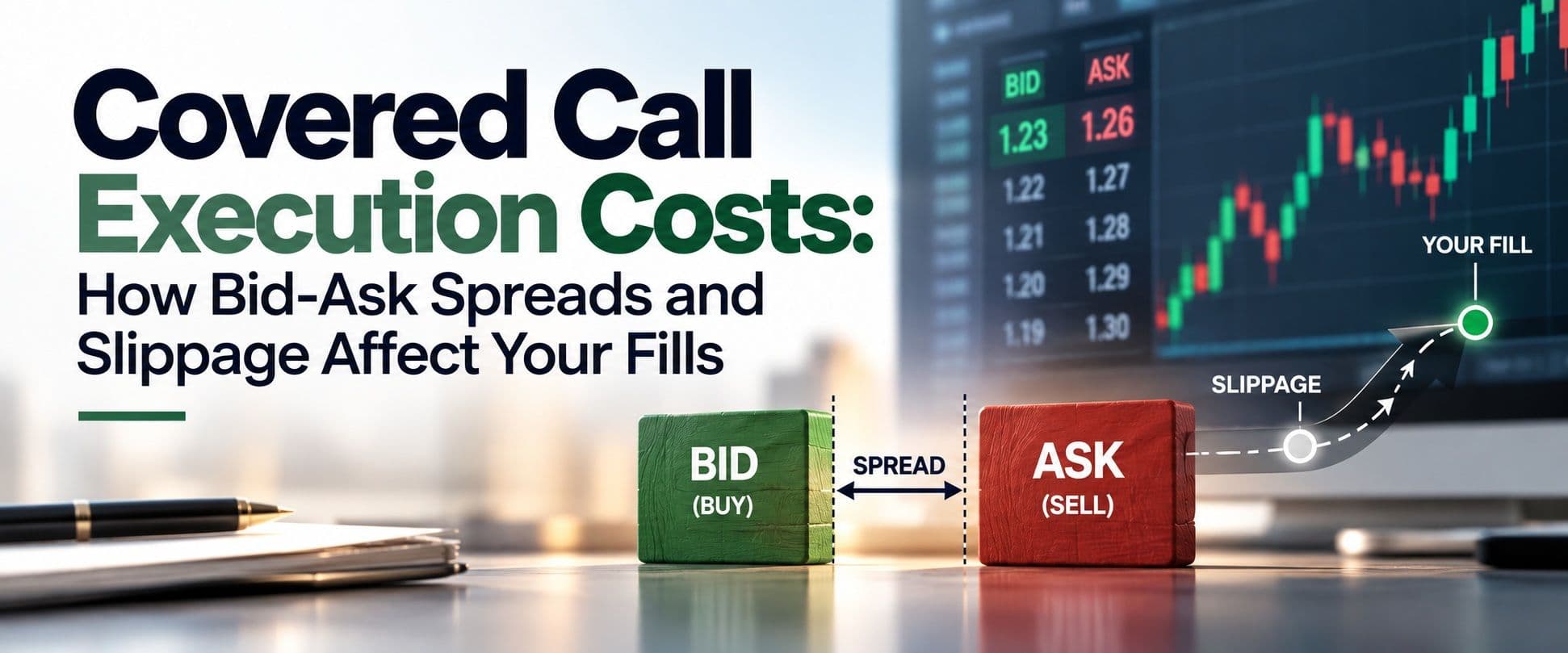
Bid-ask spread at entry
-
Spread at buyback
-
Roll frequency
-
Custodian fee schedule
-
Reporting of net versus gross premium
How AcuBooth Supports Automated Covered Call Overlay Workflows?
AcuBooth is an execution-only, rules-based overlay for designated sleeves inside a client account. It sits on top of the custodian relationship and does not hold client assets.
That structure matters for covered call strategy for RIAs because the advisor keeps oversight, while the sleeve follows defined rules. The focus stays on execution, logging, and controls.
AcuBooth is built for continuous covered call execution within the approved sleeve. The system uses deterministic rules, not discretionary trade timing.
Core workflow features
-
Execution-only overlay on a designated sleeve
-
No custody, withdrawal, or transfer rights
-
Continuous session monitoring
-
Deterministic rules and logged actions
-
Advisor-set share caps and pauses
-
Auto-exit logic for share sales
-
Custodian-held client assets throughout
Final Takeaway
The common thread across these covered call mistakes is execution detail. Strategy design matters, but process design often decides how the sleeve is run.
A review-ready program uses clear strikes, documented rolls, account-level controls, and cost tracking. It also keeps tax handling and disclosure in the same file.
AcuBooth is structured around those workflow points. It operates as an execution-only overlay, with client assets kept at the custodian and advisor oversight retained.
FAQs
What Are The Most Common Covered Call Mistakes RIAs Make In 2026?
- Periodic reviews, weak strike selection, tax gaps, delayed rolls, thin records, missing controls, and untracked costs.
How Do Covered Call Mistakes Affect Client Reporting And Reviews?
- They can create inconsistent trade logs, incomplete notes, and harder reviews during audits or disputes.
What Is A Covered Call Roll Strategy?
- It is the process of closing one call and opening another with a different strike, expiry, or both.
What Does Covered Call Tax Strategy For Taxable Accounts Mean?
- It refers to the tax handling, holding-period effects, and assignment planning that follow taxable-account option activity.
How Does An Automated Covered Call Overlay Work?
- It executes approved sleeve activity using defined rules, logged actions, and account-level controls.
Stay ahead on covered call strategy
Insights, market commentary, and updates from the AcuBooth team — delivered to your inbox.