Bid-Ask Spreads, Slippage, and Covered Calls: What Advisors Should Know
How bid-ask spreads and slippage affect covered call trades, and how advisors can review execution quality across client accounts.
A covered call's quoted premium does not tell the whole story. The price an advisor receives depends on execution, market liquidity, and trading costs.
For RIAs running covered calls across client accounts, these details matter. AcuBooth provides rules-based covered call execution for advisors who want a more consistent process across eligible positions.
What Are Covered Call Execution Costs?
Covered call execution costs are the costs and pricing differences associated with opening, managing, and closing option positions.
They can include:
-
Bid-ask spread costs
-
Slippage between the expected and actual fill price
-
Brokerage commissions and exchange fees
-
Costs from closing and reopening positions during a roll
These costs affect the trade's actual economics. A quoted premium is not necessarily the premium an advisor will receive when the order fills.
That is why execution quality deserves attention alongside strike selection and expiration.
How Does The Bid-Ask Spread Affect Covered Calls?
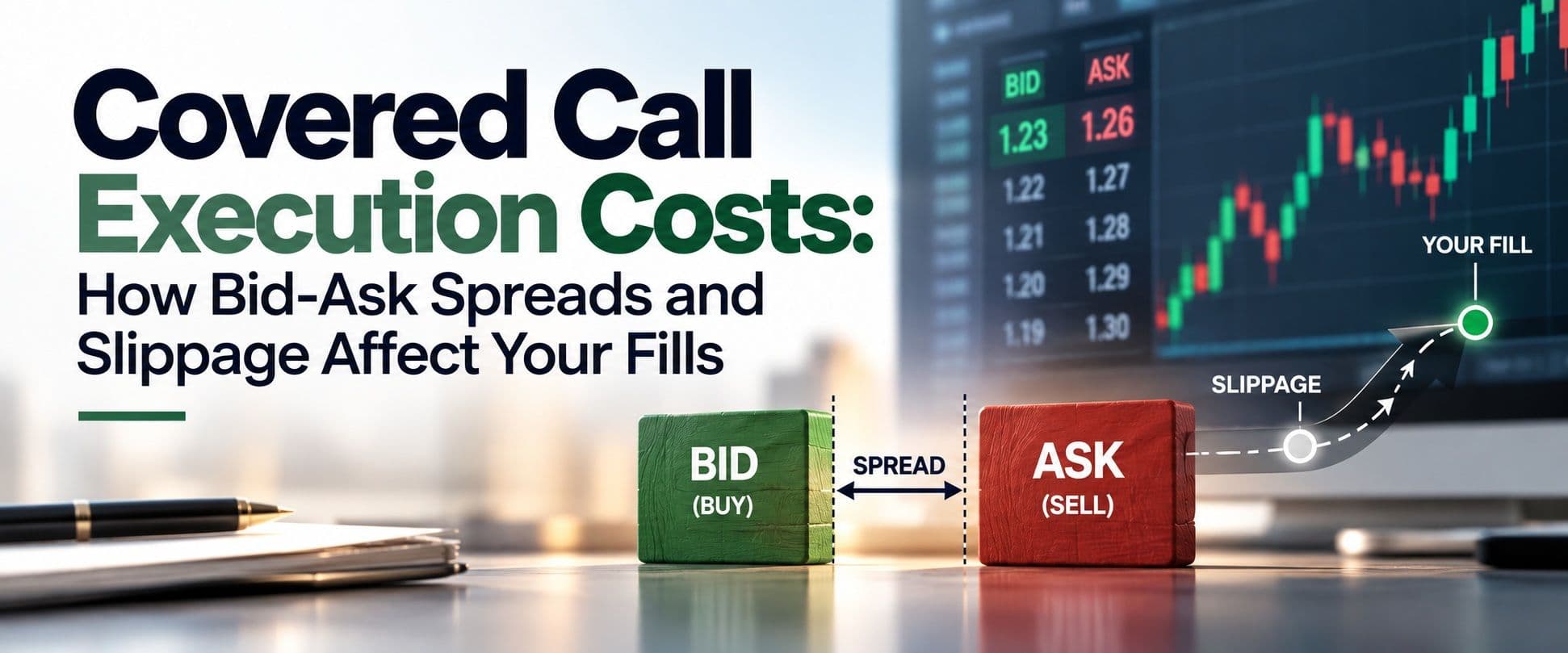
The bid is the highest price a buyer currently offers. The ask is the lowest price a seller currently accepts.
For a covered call seller, the bid matters because it shows the price available from buyers. The midpoint between the bid and ask is a reference point, but it is not a guaranteed execution price.
Consider this example:
| Option Quote | Price |
|---|---|
| Bid | $1.90 |
| Ask | $2.10 |
| Midpoint | $2.00 |
| Spread | $0.20 |
One standard equity option contract represents 100 shares. If the call sells at $1.90, the premium is $190 before fees. A fill at $2.00 would produce $200.
That $10 difference is the result of the fill price, not a change in the stock's long-term value.
Across repeated trades and multiple accounts, small differences deserve review. Actual fills depend on market conditions and the orders available at the time.
What Is Slippage In Options Trading?
Slippage is the difference between an expected trading price and the actual execution price. It can be favorable or unfavorable.
For a covered call seller, a lower fill price than expected means less premium received. A better fill means more premium than expected.
Slippage can be affected by:
-
Spread width: Wider spreads leave more room between quoted prices.
-
Market conditions: News and volatility can change quotes quickly.
-
Order type: Market orders prioritize execution, while limit orders set a price boundary.
-
Contract liquidity: The available buyers and sellers affect the prices offered.
A limit order can help control the minimum price accepted when selling a call, but it may not fill. A market order may fill faster but exposes the seller to the available bid.
Does High Options Volume Guarantee Better Execution?
No. Volume and open interest provide useful context, but neither guarantees a good fill.
Volume measures contracts traded during a period. Open interest measures outstanding contracts. Neither alone tells an advisor how much size is available at the current bid or ask.
The Options Industry Council notes that liquidity is better assessed by examining the spread and the size available on both sides of the market.
For covered call screening, advisors should review:
-
The current bid and ask
-
The spread relative to the option's price
-
Available contract size
-
Changes in quotes during the trading session
-
The underlying stock's liquidity
A contract with high volume can still have a wide spread at a particular strike or expiration.
Why Rolling Creates Another Execution Decision
Rolling a covered call means closing an existing option and opening another, usually at a different strike, expiration, or both.
It is effectively two transactions. Each leg has its own price, spread, and execution conditions.
Advisors should therefore assess the net debit or credit of the roll rather than looking only at the premium from the new call.
A larger credit does not automatically mean a better trade. The new position also changes the strike, expiration, upside room, and assignment exposure.
AcuBooth covers the mechanics in its guide to the covered call roll strategy. Execution quality should remain part of the review whenever positions are rolled.
How Should Advisors Review Covered Call Execution Quality?
Advisors need a repeatable way to examine how orders perform.
A practical review can include:
1. Compare Expected And Actual Fills
Record the relevant quote when the order is submitted, then compare it with the execution price. Use a consistent reference point for every review.
2. Review Spread Width
Track spreads by symbol, strike, and expiration. This can help identify contracts where execution deserves closer attention.
3. Include All Trading Costs
Account for commissions and fees alongside the bid-ask spread. For rolled positions, review the cost of both legs.
4. Examine Unfilled Orders
Limit orders can remain open when the market never reaches the selected price. Review whether the order was filled, changed, or cancelled.
5. Keep An Execution Record
Document the order, fill, applicable rules, and any action taken afterward.
FINRA's best-execution guidance identifies factors such as price, transaction costs, order type, and market conditions when assessing execution quality. Advisors should also follow the requirements that apply to their firms and trading arrangements.
Where Automated Covered Call Execution Fits
Manual execution can require repeated option screening, order entry, monitoring, and recordkeeping. The workload grows when the same process runs across many accounts.
A rules-based system can standardize defined steps and keep execution within approved parameters. It does not guarantee better prices or remove the need to review fills.
AcuBooth is built around automated, rules-based covered call execution for advisors. Its platform uses deterministic rules and provides execution records tied to the triggering rule. Advisors retain control over the core portfolio and approved overlay parameters.
Stay ahead on covered call strategy
Insights, market commentary, and updates from the AcuBooth team — delivered to your inbox.