Covered Call Strikes Explained: ITM vs. ATM vs. OTM
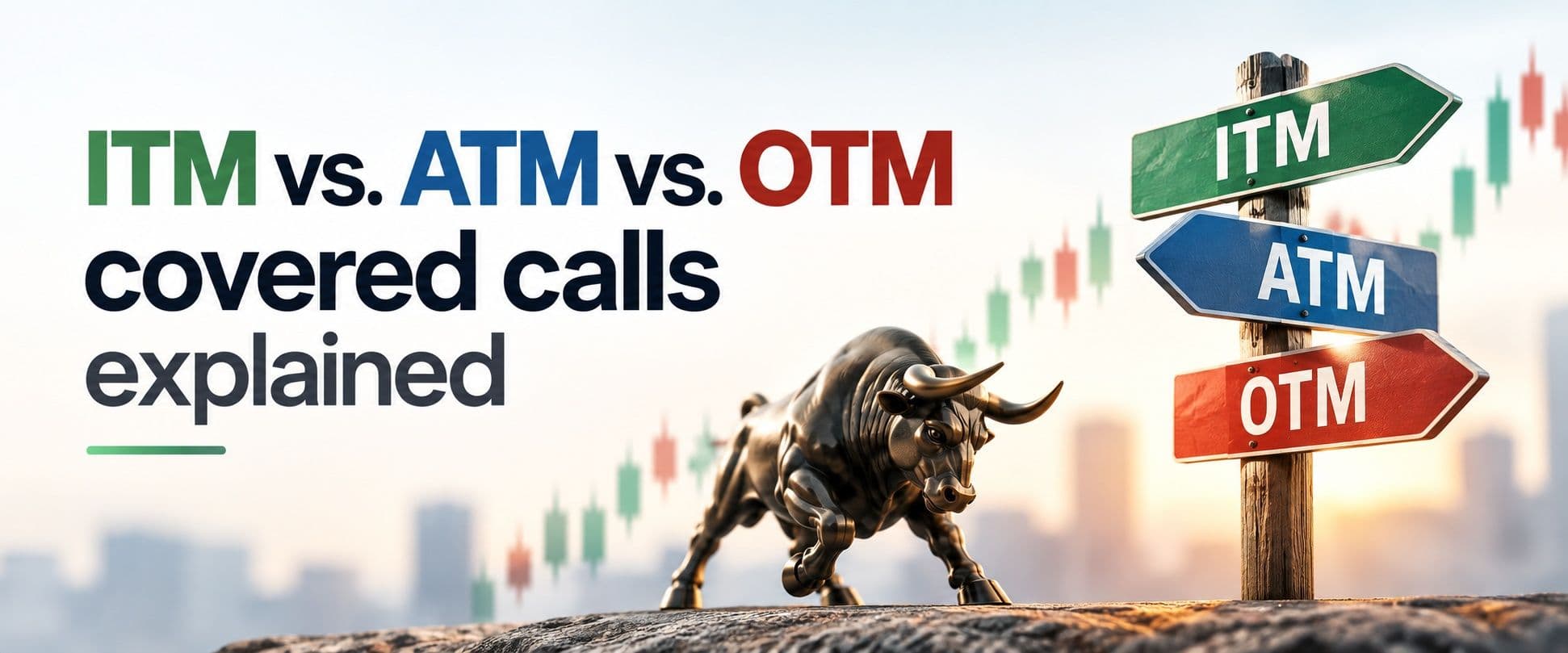
ITM vs. ATM vs. OTM covered calls explained: how each affects premium, upside room, and assignment risk, plus how advisors should compare them.
ITM Vs. ATM Vs. OTM Covered Calls: What Changes?
A covered call can use an ITM, ATM, or OTM strike. The choice changes the relationship between the stock price, strike price, option premium, upside participation, and assignment exposure.
ITM vs. ATM vs. OTM covered calls differ mainly in where the strike price sits relative to the stock price. An ITM call has a strike below the stock price, an ATM call has a strike near the stock price, and an OTM call has a strike above it. This positioning affects the covered call premium, available upside, and potential assignment exposure.
This guide explains ITM covered calls, ATM covered calls, and OTM covered calls, including how moneyness affects premium and assignment considerations.
See How to Choose a Covered Call Strike Price.
What Is An ITM Covered Call?
An ITM covered call has a strike price below the current stock price.
For example, if a stock trades at $100, a $95 call is ITM. The option has intrinsic value because the call strike is below the market price of the shares.
How ITM Covered Calls Work
An in the money covered call generally carries more intrinsic value than an ATM or OTM call with the same expiration.
Fidelity's covered-call materials identify ITM calls with higher premiums and a higher probability of assignment compared with ATM and OTM alternatives.
Key considerations include:
-
Higher Premium: ITM calls generally have more premium because they contain intrinsic value.
-
Lower Upside Room: The strike sits below the current stock price.
-
Greater Assignment Exposure: An ITM call has a greater likelihood of assignment than an OTM call.
-
Lower Selling Threshold: The shares can be sold at a strike below the current market price if assigned.
What Is An ATM Covered Call?
An ATM covered call has a strike price at or very close to the current stock price.
If the stock trades at $100, a $100 call would be an example of an ATM call. The exact ATM strike depends on the available option strikes and the stock's current market price.
How ATM Covered Calls Work
An at the money covered call sits close to the current share price.
ATM options contain primarily extrinsic value because the strike is close to the underlying price. Fidelity's options education materials also identify ATM options as having substantial time value.
Key considerations include:
-
Moderate Upside Room: The strike sits near the current share price.
-
Meaningful Premium: ATM options can carry substantial time value.
-
Assignment Exposure: Assignment exposure can increase as the stock moves above the strike.
-
Close Price Relationship: Small stock-price movements can change the option's moneyness.
What Is An OTM Covered Call?
An OTM covered call has a strike price above the current stock price.
For example, if a stock trades at $100, a $110 call is OTM. The call has no intrinsic value because purchasing the shares at $110 through the option would cost more than buying them at the current market price.
How OTM Covered Calls Work
An out of the money covered call provides more room between the current stock price and the strike.
That additional distance can leave more room for share-price appreciation before the call reaches the strike. Schwab describes OTM covered calls as having lower premiums and greater upside room than calls struck closer to the stock price.
Key considerations include:
-
Lower Premium: OTM calls generally have less premium than comparable ITM calls.
-
More Upside Room: The strike is above the current share price.
-
Lower Assignment Exposure: The call is farther from being ITM at the time of sale.
-
Higher Selling Threshold: The shares are sold at a higher strike if assignment occurs.
ITM Vs. ATM Vs. OTM Covered Calls
The main difference between ITM vs. ATM vs. OTM covered calls is where the strike sits relative to the stock price.
These differences create distinct trade-offs when selecting a covered call. Fidelity's educational material similarly describes ITM calls as having higher premiums and assignment probabilities, while OTM calls have lower premiums and greater upside potential.
| Factor | ITM | ATM | OTM |
|---|---|---|---|
| Strike Relative To Stock | Below stock price | Near stock price | Above stock price |
| Intrinsic Value | Yes | Generally none | None |
| Premium | Generally higher | Often substantial | Generally lower |
| Upside Room | Lower | Moderate | Higher |
| Assignment Exposure | Higher | Moderate | Lower |
| Selling Threshold | Lower | Near current price | Higher |
Which Covered Call Has The Highest Premium?
An ITM covered call generally carries a higher premium than comparable ATM or OTM calls with the same expiration because the option contains intrinsic value.
However, premium alone does not establish which strike fits an investor's objective. The strike price, effective selling price, upside room, expiration, volatility, and assignment considerations also matter.
For example, consider a stock trading at $100:
| Strike | Moneyness | Relative Premium | Upside Before Strike |
|---|---|---|---|
| $95 | ITM | Generally Higher | Lower |
| $100 | ATM | Moderate | Moderate |
| $110 | OTM | Generally Lower | Higher |
The comparison is about the structure of the contracts rather than a specific premium quote.
Which Covered Call Has The Highest Assignment Risk?
Assignment exposure generally increases as a short call moves ITM.
An ITM covered call therefore has greater assignment exposure than an OTM call. Schwab notes that short options can be assigned before expiration and that ITM options have a higher risk of early assignment.
Assignment should also be considered around dividends and when an option has little remaining extrinsic value. Fidelity notes that assignment can occur before expiration and that specific conditions can increase assignment likelihood.
Which Covered Call Provides More Upside?
An OTM covered call provides more room between the current stock price and the strike.
That means the shares can appreciate farther before reaching the strike price. If the call is assigned, however, the shares are sold at the strike and participation in appreciation above that level ends.
For ITM vs. ATM vs. OTM covered calls, the trade-off can be summarized as follows:
-
ITM: Higher premium and less upside room.
-
ATM: Strike near the current stock price.
-
OTM: Lower premium and more upside room.
Should I Sell ITM Or OTM Covered Calls?
The decision starts with the price at which the investor is comfortable selling the shares.
An investor considering an ITM covered call should be comfortable with the lower strike relative to the current stock price. An investor considering an OTM covered call should evaluate whether the lower premium fits the desired selling price and upside participation.
Before selecting the strike, review:
-
Target Selling Price: What price would make selling the shares acceptable?
-
Premium: How much option premium does each strike provide?
-
Upside Room: How much appreciation remains before the strike?
-
Assignment Exposure: How close is the call to being ITM?
-
Expiration: How long will the option remain open?
-
Liquidity: How active is the option market?
-
Bid-Ask Spread: What spread applies to the selected contract?
What Happens When An ATM Call Is Assigned?
When an ATM call is assigned, the investor sells the underlying shares at the strike price.
If the strike was $100, the shares would be sold at $100 per share under the option contract. The premium received from selling the call is also part of the overall covered-call economics.
Assignment results in the sale of the underlying shares. Fidelity explains that the effective selling price includes the strike price plus the option premium, less applicable commissions.
Can An OTM Call Become ITM?
Yes. An OTM call can become ITM if the underlying stock price rises above the strike price.
For example, a $110 call is OTM while a stock trades at $100. If the stock subsequently rises above $110, the call becomes ITM.
Moneyness changes as the underlying stock price moves. An out of the money covered call at trade entry can therefore have a different moneyness position later in the contract's life.
How Should Advisors Compare ITM, ATM, And OTM Calls?
For RIAs, the comparison should begin with the client's portfolio objectives and willingness to sell.
The selected strike also needs to fit the position's size, cost basis, concentration, account characteristics, and portfolio restrictions.
A practical review can include:
| Advisor Consideration | ITM | ATM | OTM |
|---|---|---|---|
| Desired Selling Price | Lower relative level | Near current price | Higher relative level |
| Premium Preference | Higher | Moderate | Lower |
| Upside Preference | Lower | Moderate | Higher |
| Assignment Exposure | Higher | Moderate | Lower |
| Portfolio Fit | Depends On Client Objective | Depends On Client Objective | Depends On Client Objective |
This framework keeps ITM vs. ATM vs. OTM covered calls connected to the portfolio decision rather than treating moneyness as a standalone selection rule.
How AcuBooth Handles Covered Call Management
AcuBooth provides a rules-based covered call overlay for RIAs and institutional wealth managers.
The system applies deterministic rules across eligible positions, with controls for position-level share limits and individual symbols. Advisors retain control of the broader portfolio while the covered-call activity operates within the designated overlay.
AcuBooth's operating structure includes:
-
Rules-Based Execution: Covered call activity follows defined rules.
-
Position Controls: Share caps can be established at the position level.
-
Symbol Controls: Selected symbols can be paused.
-
Trading-Session Monitoring: The system monitors eligible positions during trading sessions.
-
Trade Records: Covered-call activity is recorded at the trade level.
-
Custody: Client assets remain with the custodian.
-
Charles Schwab Integration: AcuBooth currently integrates with Schwab accounts.
Learn more through How AcuBooth Works and AcuBooth for Advisors.
Stay ahead on covered call strategy
Insights, market commentary, and updates from the AcuBooth team — delivered to your inbox.