10 Covered Call Stocks to Watch for Passive Income in 2026
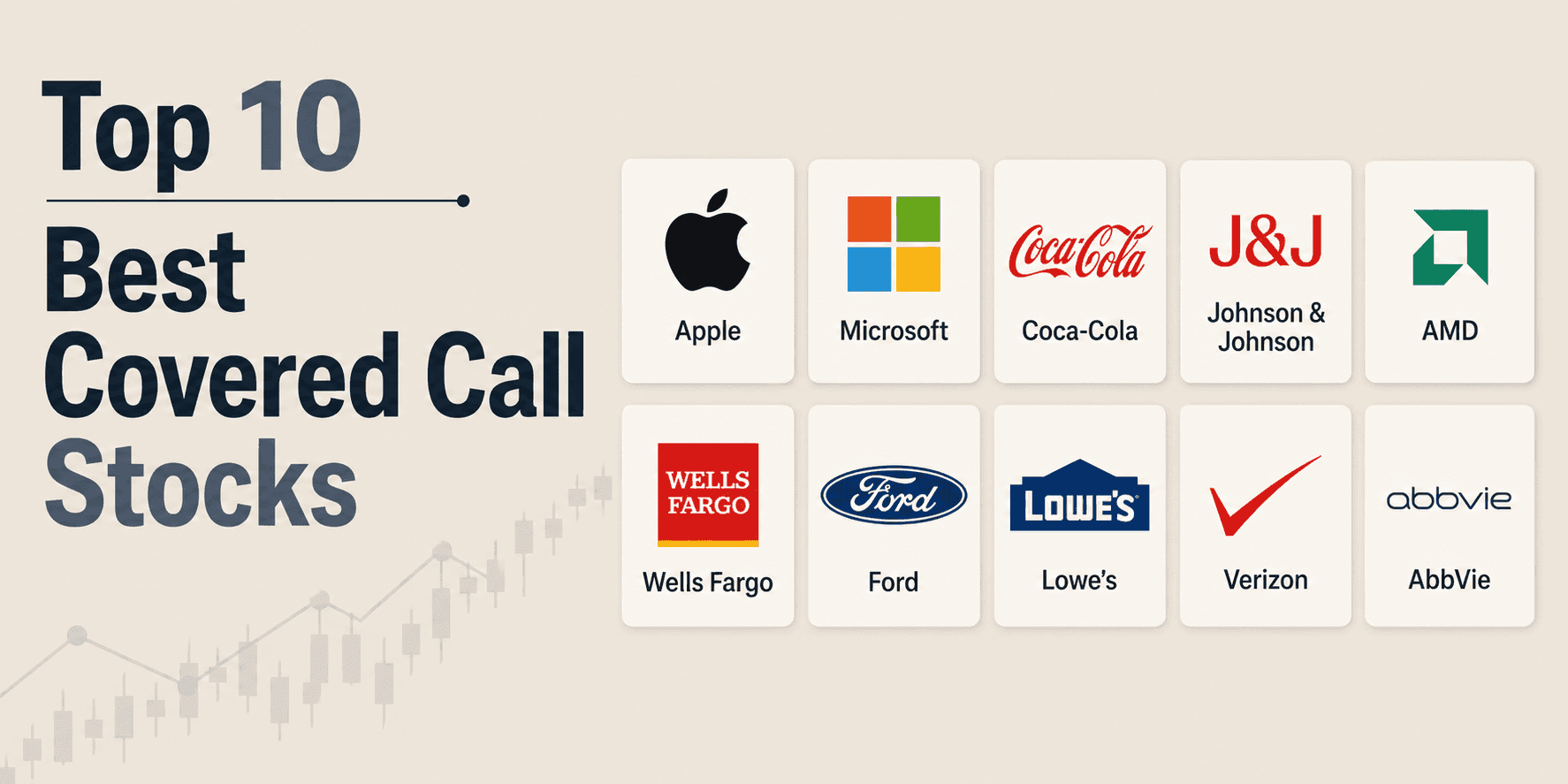
Not every stock fits a covered call strategy—liquidity, volatility, and dividend profile all matter. Here's a 5-point stock screen plus a look at 10 names that come up often in covered call screens for 2026, from Apple and Microsoft to Coca-Cola and AbbVie.
Top 10 Best Covered Call Stocks for Passive Income in 2026
Covered calls remain a common income structure in 2026. Many advisors review them alongside IRS Publication 550 and current SEC guidance.
A covered call uses shares the account already owns. The advisor sells a call option against those shares and collects the premium.
If the stock stays below the strike, the premium remains in the account. If the stock moves above the strike, assignment can occur at the strike price.
This article covers stock screens, tax rules, and account-level execution. It also shows how a covered call overlay program for RIAs can sit inside a client account workflow.
The 5-Point Stock Screen For Covered Calls
Not every stock suits covered calls. The screen below focuses on trading quality, volatility, income, and business fit.
-
Liquidity: High option volume and narrow bid-ask spreads matter
-
Implied volatility: Moderate levels often support clearer premium levels
-
Price stability: Sideways or mild upward patterns fit the structure
-
Dividend yield: Dividend stocks add a second income source
-
Fundamentals: Large-cap names with durable businesses remain easier to size
These filters help explain why covered calls on dividend stocks appear often. They also help answer how to generate income with covered calls without forcing weak trade setup.
Top 10 Covered Call Stocks For Passive Income In 2026
This list is a screening list, not a recommendation list. It groups names that often appear in covered call screens.
| Outcome | Tax Treatment | Reporting Note |
|---|---|---|
| Option expires | Short-term capital gain | Broker tax package applies |
| Call is closed early | Gain or loss realized | Track on Form 8949 |
| Shares are assigned | Premium folds into sale proceeds | Holding period still matters |
| Long-term stock sale | Long-term capital gain | Current federal capital-gain rates apply |
| High-earner surtax | Net investment income tax | 3.8% applies when thresholds are met |
Current options data changes daily. Check live chains before any trade decision.
1. Apple
Apple has deep options liquidity and wide investor familiarity. That combination can help trading desks place covered calls with fewer fill issues. Its lower volatility profile often supports calmer strike selection.
Account teams often review Apple inside conservative equity sleeves. The stock also fits taxable or tax-advantaged accounts that need liquid exits. Premium levels depend on current implied volatility and expiration choice.
-
Deep options volume supports cleaner order fills
-
Lower volatility shapes premium and assignment profiles
2. Microsoft
Microsoft pairs liquid options with a steadier price profile. That structure can fit covered call work inside long-term holdings. Many desks value that combination when they need flexible strike selection.
Account teams often use Microsoft in conservative taxable sleeves. The stock also fits tax-advantaged accounts that need liquid contract flow. Premium levels still depend on current market conditions and expiry choices.
-
Liquid option chains support practical trade entry
-
Steadier price movement affects premium and assignment behavior
3. Coca-Cola
Coca-Cola suits dividend-focused accounts with slower price movement. That profile can fit income sleeves where the shares already sit in the portfolio. The stock often appears in screens that look for stability and predictable cash flow.
The options market is active enough for covered call work. Premiums reflect the slower trading range, so strike choice matters. The dividend component also needs its own holding-period review.
-
Dividend focus supports income-oriented account design
-
Slower price movement changes strike and premium choices
4. Johnson & Johnson
Johnson & Johnson fits defensive accounts and income overlays. The company often appears in long-term holdings that already suit slower portfolio turnover. That can make call writing more practical for some advisors.
The stock also brings a regular options market. Business events and earnings dates still affect strike selection and expiration planning. Those details belong in the trade note, not the assumption set.
-
Defensive profile suits longer holding periods
-
Options activity still needs event-date review
5. AMD
AMD brings active options flow and sharper price swings. That makes it a different type of covered call screen from slower dividend names. The structure can suit accounts that accept more movement in exchange for richer option pricing.
Higher volatility changes assignment attention. It also means strike selection needs more discipline. The stock does not carry a dividend, so the income mix depends more on premiums.
-
Heavy options flow supports active contract selection
-
Higher volatility requires closer strike and expiry review
6. Wells Fargo
Wells Fargo combines financial exposure with regular options interest. That can suit accounts that already hold bank or sector allocations. The stock often shows enough market activity for structured call writing.
Dividend profile matters here, along with headline risk. Financial names can move quickly around sector news and earnings releases. Those events should sit inside the trade calendar before any sale.
-
Financial sector exposure creates active trade interest
-
Dividend profile and headlines both affect planning
7. Ford
Ford offers a lower share price and active option use. That can help smaller accounts that still need the 100-share minimum. The stock often appears in screens for accessible income setups.
Dividend history needs review because business conditions can change. The share price also tends to move with the cycle. That makes expiry choice and strike placement more important.
-
Lower share price can help contract sizing
-
Cyclical movement changes the premium setup
8. Lowe's
Lowe's fits consumer and retail sleeves with liquid options. The stock often sits in portfolios that already favor established brands. That can make it easier to plan covered call exposure around existing holdings.
Earnings dates and housing-related news still matter. Strike choice should reflect those event windows. The dividend profile also adds another account-level planning point.
-
Liquid options support orderly trade placement
-
Earnings timing affects strike and expiry planning
9. Verizon
Verizon suits income-focused screens and regular contract activity. Many accounts review it for dividend exposure alongside option premiums. That makes it relevant when the portfolio needs both elements in one position.
Leverage and sector headlines can affect sentiment. Those factors belong in the file before trade entry. The stock still needs standard holding-period review when dividends matter.
-
Dividend focus supports income-oriented structures
-
Sector headlines can change short-term pricing
10. AbbVie
AbbVie pairs healthcare exposure with consistent options depth. That can suit dividend-aware accounts that want a sector other than banks or consumer names. The stock often appears in coverage screens because it combines multiple account uses.
Product and pipeline news can move premiums. That makes event review important before strikes are chosen. The income mix still depends on current option levels, not a fixed pattern.
-
Healthcare exposure widens portfolio sector balance
-
Product news can affect option pricing quickly
AcuBooth: Automated Covered Call Overlay For RIA Firms
AcuBooth is a rules-based covered call overlay program for RIAs. It runs inside a designated sleeve at Charles Schwab.
Explore AcuBooth pricing for account setup details.
AcuBooth Features
| Feature | Detail |
|---|---|
| Program type | Rules-based covered call overlay |
| Execution style | Continuous during trading sessions |
| Custody | Client assets remain at Charles Schwab |
| Advisor control | Advisor keeps portfolio and client relationship control |
| Position minimum | 100 shares per contract |
| Share caps | Advisor sets sleeve size per account |
| Symbol pause | New orders can pause on any symbol |
| Auto-exit safety | Outstanding calls close if shares are sold |
| Logs | Every trade links to the triggering rule |
| Access scope | Trade-only access, no withdrawal rights |
-
Advisor: Sets suitability, sleeve size, and account instructions
-
Client: Signs the overlay agreement and approves options access
-
AcuBooth: Screens, executes, and monitors under approved rules
-
Charles Schwab: Holds assets, confirms trades, and issues statements
AcuBooth operates with trade-only access. It does not move cash, transfer securities, or alter core holdings.
Conclusion
The stock list above reflects common covered call screens in 2026. The RIA section shows how execution changes at account scale.
If you want platform detail, review AcuBooth and AcuBooth pricing.
FAQs
How Do Covered Calls Generate Monthly Income?
- The account sells calls, collects premiums, and repeats per expiry cycle
What Stocks Are Best For Covered Calls In 2026?
- Liquid, options-heavy names with stable trading patterns fill most screens. For workflow detail, read the AcuBooth Blog.
Are Covered Call Premiums Taxed As Ordinary Income?
- Tax treatment depends on outcome, holding period, and account type
What Is A Qualified Covered Call Under IRS Rules?
- IRS Publication 550 defines qualifying strikes, dates, and holding-period effects
Other Related Blogs
Stay ahead on covered call strategy
Insights, market commentary, and updates from the AcuBooth team — delivered to your inbox.